Why relationship patterns repeat—and how to notice them
A grounded way to observe repeating relationship triggers, protection strategies and repair attempts without turning a pattern into a diagnosis.
By AstraRead Editorial · Updated
The short answer
Relationship patterns repeat when a familiar trigger activates a familiar protection strategy and both people’s responses reinforce the loop. The useful unit is not a personality label but a sequence: what happened, what meaning appeared, what each person did next and how repair was attempted.
Key points
- Describe the sequence before naming the pattern.
- Protection strategies often make sense even when their effect is painful.
- A small change earlier in the loop is easier than a perfect response at the peak.
Start with the observable sequence
Write down the event without interpretation: a delayed reply, changed plan, critical comment or unanswered request. Then note the immediate meaning you gave it, the feeling that followed and the action you took. This separates evidence from the story built around it.
Identify the protection strategy
Common strategies include withdrawing, pursuing reassurance, explaining excessively, becoming controlling, joking, pleasing or attacking first. A strategy may have protected dignity or safety in another context while creating distance now. Understanding its function is different from excusing harm.
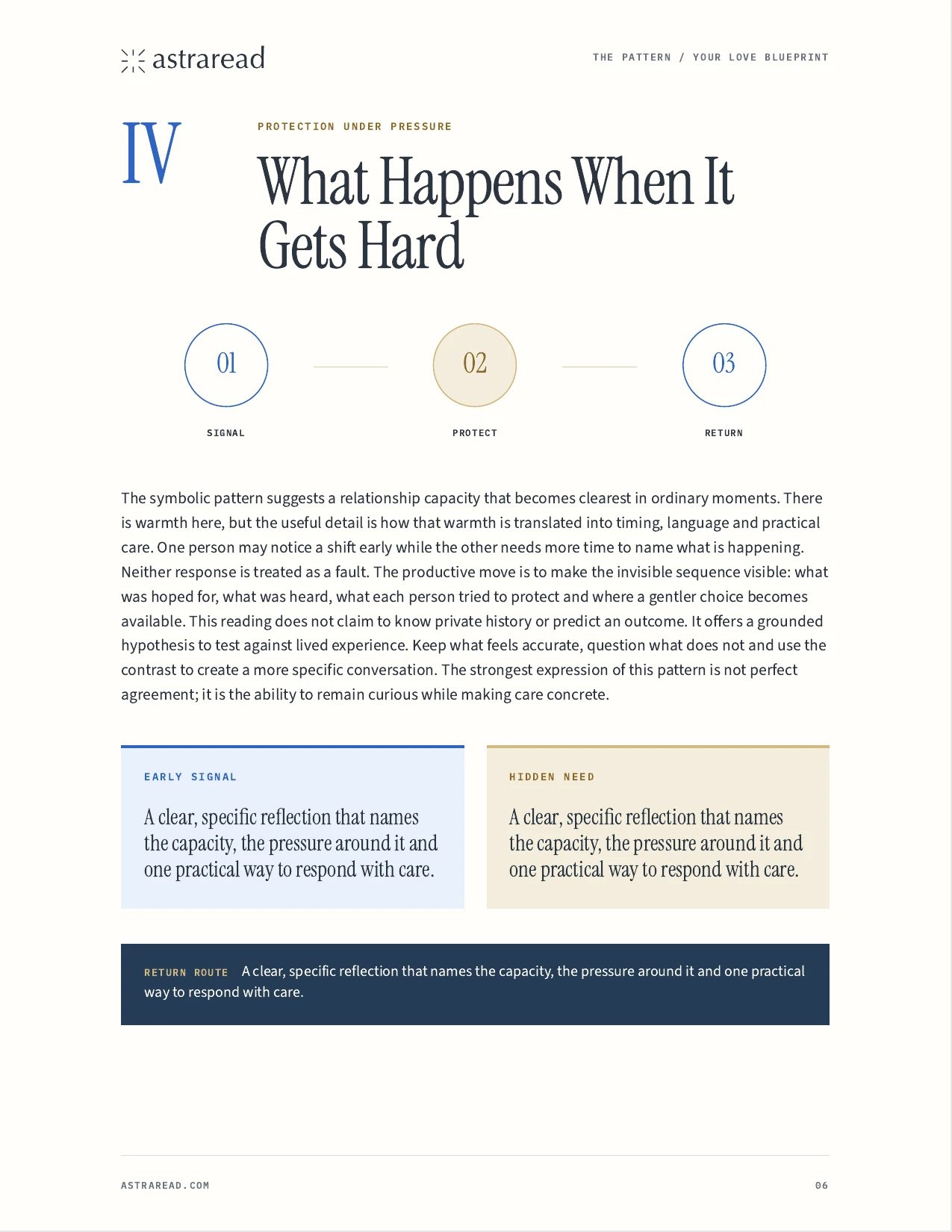
Map how the other response reinforces it
One person’s withdrawal may intensify the other’s pursuit; pursuit may deepen withdrawal. The loop is relational even when responsibilities are not equal. Describe each turn carefully and keep boundaries around disrespect, coercion and safety.
Look for the earliest flexible moment
Do not wait for the most intense part of the conflict. Find the first moment where a different sentence, pause or request was still possible. A useful experiment might be naming the trigger, asking for ten minutes or confirming when the conversation will resume.
Know when reflection is not enough
Symbolic reports and journaling can help name a loop, but they are not therapy and should never be used to rationalize abuse. Concerns about safety, coercion, trauma or mental health deserve qualified support and practical protection.
Continue with this topic
-
Why do I keep choosing the wrong partners?
Notice the evidence behind repeated attraction, unavailable partners and familiar relationship loops without turning the pattern into self-blame or diagnosis.
10 min read · Relationships
-
What is a love pattern reading?
Learn what a personalized love pattern reading explores, which details it needs and how it differs from compatibility tests, therapy and prediction.
8 min read · Relationships
-
Relationship report vs love compatibility reading
Choose between a broad two-person relationship report and a romance-focused compatibility reading without scores or soulmate claims.
7 min read · Relationships
Related personalized reports
-
THE PAIR · Compatibility Blueprint
See what creates the pull, where your rhythms diverge and how repair can become easier for both people.
16 pages · $24.90 USD · Couples and close relationships
-
THE PATTERN · Your Love Blueprint
Notice the relationship pattern you bring into closeness, self-protection, conflict and repair.
15 pages · $24.90 USD · Solo reflection on recurring love patterns
Continue exploring
Browse all Journal guides or use the free Destiny Matrix calculator.