Why patterns repeat and how to notice them gently
A practical reflection process for recurring roles, conflicts and choices without turning them into fixed identities.
By AstraRead Editorial · Updated
A pattern is a default, not a destiny
Many recurring responses began as useful ways to keep peace, create safety or make a decision quickly. A default can continue after its original context has changed. Naming it does not make it permanent; it creates a moment in which another response becomes possible.
Look for the sequence
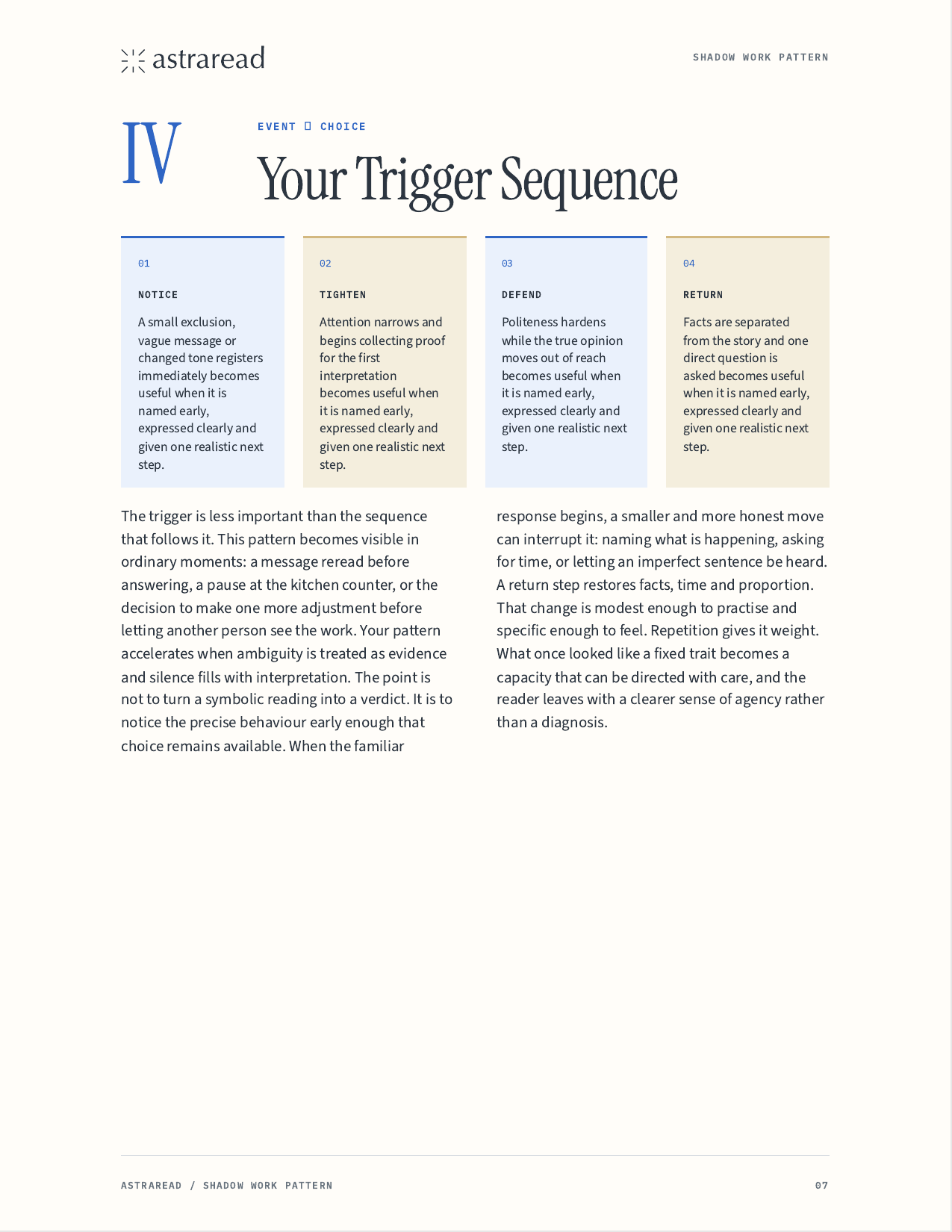
Instead of asking why the same problem always happens, write down the sequence: what occurred, what you noticed, what you assumed, what you did next and what followed. Repetition often becomes visible in the transitions between those moments.
Separate observation from judgment
“I postpone difficult conversations” is an observation. “I am incapable of honesty” is a verdict. Reflection works better when the language remains specific enough to test against real life and kind enough to keep you curious.
Choose one week of evidence
Pick one pattern and notice it for seven days. Record both the moments when it appears and the moments when it does not. The exceptions keep a symbolic description from becoming an identity and often reveal the conditions that support a different choice.
Continue with this topic
Related personalized reports
-
Shadow Work Reading
Notice recurring triggers, protective responses and the strengths you may be keeping out of view.
16 pages · $17.90 USD · Deeper self-reflection
Continue exploring
Browse all Journal guides or use the free Destiny Matrix calculator.